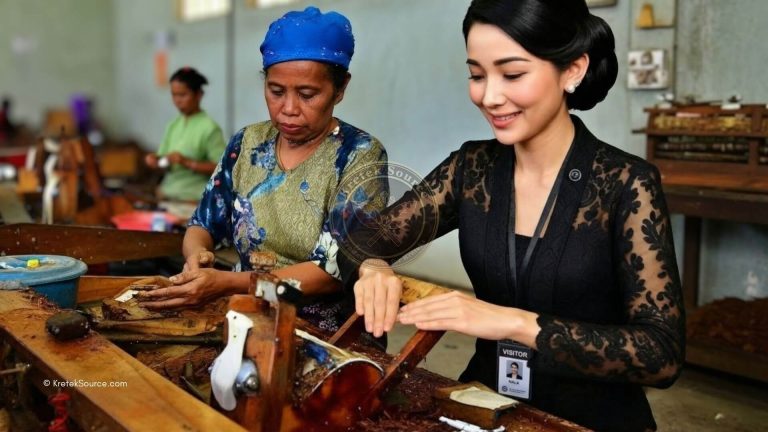
The Art of the Fold: Why Hand Rolled Kretek Remains the Soul of Indonesia
Can a machine truly replicate the rhythmic click-clack of a manual rolling station? This question sits at the heart of the Indonesian tobacco industry, where the legacy of hand rolled kretek faces the relentless march of automation. For decades, the distinct aroma of cloves has been synonymous with the artisanal touch of thousands of workers. Yet, as global markets demand consistency, the soul of the product undergoes a fundamental shift. Is the transition to machine-made sticks a necessary evolution or a loss of cultural identity? To understand this, we must look at the tactile history of hand rolled kretek and how it differs from its mechanized counterparts. This exploration reveals that the choice between hand and machine is not just about production speed, but about the very essence of the smoke itself. The hand rolled kretek remains a symbol of craftsmanship that technology struggles to mirror.
The Historical Foundation of Hand Rolled Kretek
The story of the hand rolled kretek begins in the late 19th century in Kudus, Central Java. Legend credits Haji Jamhari with creating the first clove-infused smoke to medicinal ends, relieving his chest pains. This early version of the hand rolled kretek was a far cry from the standardized sticks we see today. It relied on corn husks, known as klobot, to bind the mixture of tobacco and crushed cloves. As the popularity of this unique blend grew, the production method evolved into the Sigaret Kretek Tangan (SKT) category. This category defined the industrial landscape of Indonesia for over a century, relying on millions of manual laborers. The hand rolled kretek became the backbone of the local economy, providing livelihoods for entire communities. Even as global trends shifted toward mass production, the traditional hand rolled kretek maintained its status as a premium, culturally significant item. It represented a connection to the land and the specific agricultural cycles of the Indonesian archipelago.

The Technical Tension: Hand Rolled Kretek vs. Automation
The primary conflict between the hand rolled kretek and machine-made variants lies in the physical characteristics of the stick. Machine-made cigarettes, or Sigaret Kretek Mesin (SKM), offer a uniform density and a consistent burn rate that appeals to modern consumers. However, purists argue that this uniformity strips the hand rolled kretek of its unique character. In a hand rolled kretek, the distribution of cloves and tobacco is slightly irregular, creating a dynamic flavor profile that shifts with every puff. This irregularity is not a defect but a hallmark of the artisanal process that defines the hand rolled kretek experience. Evaluation criteria for a high-quality hand rolled kretek often focus on the tightness of the roll and the moisture content of the cloves. Unlike the dry, fast-burning machine versions, the hand rolled kretek often burns slower and cooler. This allow the natural oils from the cloves to caramelize more effectively against the tobacco plant fibers. The result is a richer, more complex smoke that machine-made sticks rarely achieve.
The Clove Connection and Flavor Profiles
The soul of any hand rolled kretek is the quality of the cloves used in the blend. Indonesia produces some of the finest cloves in the world, and their interaction with tobacco is heightened in a hand rolled kretek. Because the manual rolling process does not subject the materials to the high-pressure heat of a machine, the volatile oils remain intact. This preservation of oils is why many enthusiasts prefer the Djarum 76 Unfiltered Kretek for its raw, spicy punch. The manual process allows for a higher clove-to-tobacco ratio, which is often dampened in machine-made versions to prevent clogging. Another example of this traditional excellence is the Gudang Garam Klobot, which uses corn husks to enhance the earthy notes. Even more refined options like the Djarum Coklat showcase how the hand rolled kretek can achieve a smooth, chocolatey finish. These products demonstrate that the hand rolled kretek is not just a relic but a sophisticated delivery system for spice. The tactile nature of the hand rolled kretek ensures that the cloves are never just an additive but the primary protagonist.
Socio-Economic Analysis of the Hand Rolled Kretek Industry
Beyond the flavor, the hand rolled kretek represents a vital social contract within Indonesia. The production of a single hand rolled kretek stick involves a level of human interaction that is entirely absent in the SKM sector. Thousands of women in regions like East and Central Java have spent generations perfecting the art of the roll. This labor-intensive nature of the hand rolled kretek is protected by specific government regulations to prevent mass unemployment. Economically, the hand rolled kretek serves as a buffer against the complete mechanization of the agricultural sector.
The transition from manual labor to mechanized production represents more than a shift in efficiency; it is a fundamental reordering of the sensory experience associated with Indonesian tobacco. While a machine can ensure a perfect draw every time, it cannot replicate the subtle variations in density and spice distribution that define a traditional hand rolled kretek stick.
This editorial perspective highlights why the hand rolled kretek is more than a commodity; it is a living heritage. When a consumer chooses a hand rolled kretek, they are supporting a tradition that values human skill over mechanical output. The hand rolled kretek remains a testament to the power of craft in an era of digital dominance. It is a product where the fingerprints of the maker are metaphorically present in every stick.
The Modern Relevance of Hand Rolled Kretek
In the contemporary market, the hand rolled kretek is experiencing a surprising resurgence among younger, craft-conscious smokers. This demographic values authenticity and the story behind the product, making the hand rolled kretek an attractive choice. While machine-made cigarettes dominate the volume of sales, the hand rolled kretek dominates the cultural conversation. Many are returning to the hand rolled kretek as a way to reconnect with their roots and enjoy a slower, more intentional smoking experience. This shift is detailed in our recent post on The Evolution of Smoke: A Deep Dive into Filter Kretek History, which explores these trends. The hand rolled kretek is no longer seen as an old-fashioned choice but as a premium, artisanal alternative. Manufacturers are responding by releasing high-end versions of the hand rolled kretek that use aged tobacco and select clove harvests. This ensures that the hand rolled kretek remains relevant in a competitive global market. The future of the hand rolled kretek looks bright as consumers prioritize quality over convenience. As long as there is an appreciation for the human touch, the hand rolled kretek will continue to thrive.
The evolution from the original hand rolled kretek to modern machine-made sticks reflects the broader tensions of the modern world. While machines offer speed and uniformity, they often fail to capture the nuance that a hand rolled kretek provides. The artisanal nature of the hand rolled kretek ensures that each stick is a unique expression of Indonesian spice culture. From the economic stability it provides to the complex flavor profiles it delivers, the hand rolled kretek is irreplaceable. It stands as a bridge between the past and the future, proving that some things are better left to human hands. Ultimately, the hand rolled kretek is not just a cigarette; it is a piece of history you can hold. Choosing a hand rolled kretek is an act of preserving a culture that refuses to be automated. As we look forward, the hand rolled kretek will remain the gold standard for those who seek the true spirit of cloves.