
The Magnificent Sun-Drying Ritual That Refines Indonesia’s Finest Cloves
Can the power of the sun truly be replaced by the precision of a machine, or is there a mystical alchemy in the tropical heat that technology simply cannot replicate? This question lies at the heart of the clove industry in Indonesia, where the transition from a fresh green bud to a dark, aromatic spice is governed by the Sun-Drying Ritual. While modern industrialization pushes for faster, mechanical dehydration to meet global demands, the most discerning producers refuse to abandon the ancient ways. The tension between efficiency and quality is nowhere more apparent than on the bamboo mats of Javanese villages, where the sun is not merely a heat source but a critical biological catalyst. Understanding why this process remains essential requires a look into the delicate chemistry of the spice and the cultural heritage that protects its integrity.
The Science of Solar Dehydration
The drying of Syzygium aromaticum is not a simple matter of removing moisture; it is a complex chemical transformation that requires a specific temperature gradient only found in nature. When the cloves are spread out under the equatorial sun, the heat causes a slow evaporation of water while simultaneously concentrating the essential oils. This slow pace is vital because rapid heating often causes the cell walls to rupture prematurely, leading to a significant loss of eugenol, the primary aromatic compound. The UV rays from the sun also play a subtle role in stabilizing the volatile compounds, ensuring that the aroma remains trapped within the woody fiber of the bud rather than escaping into the air.
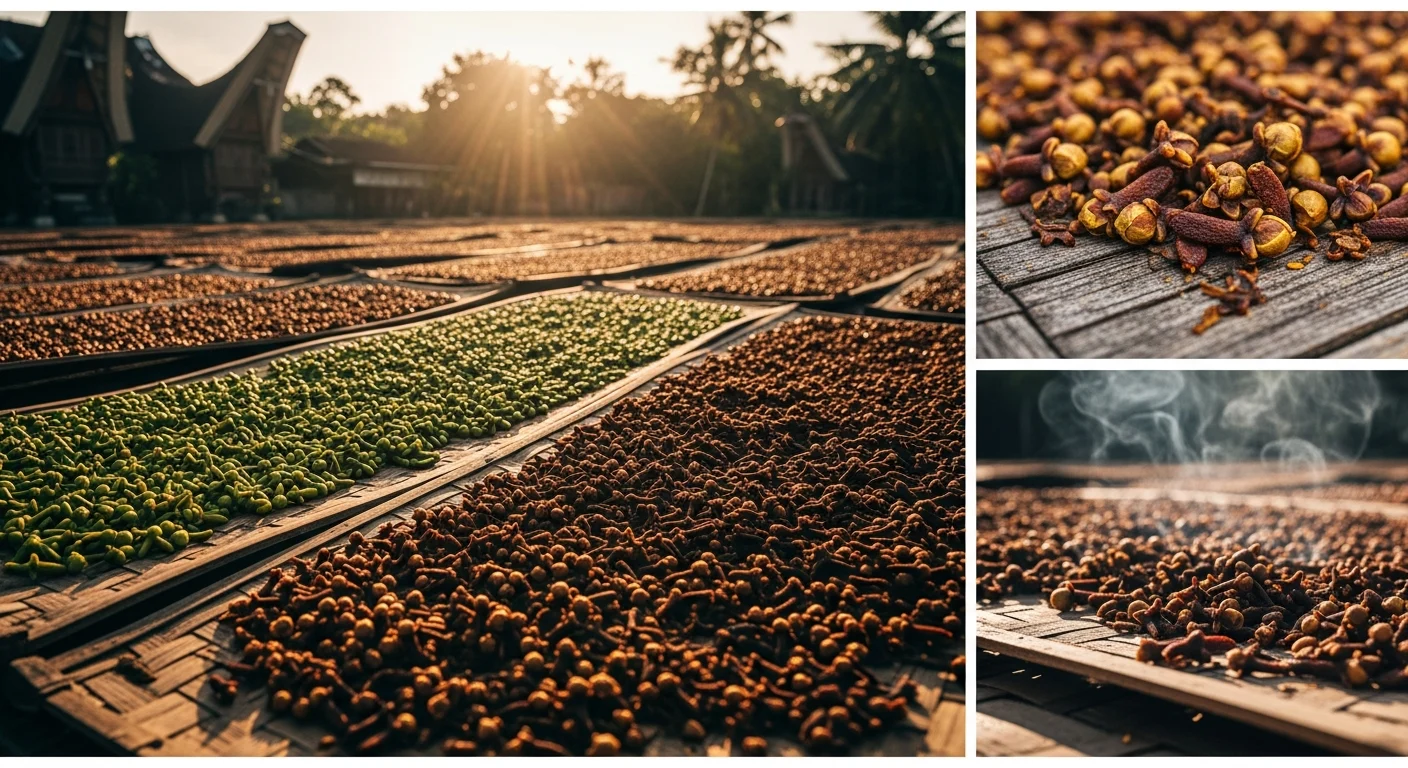
Traditional farmers monitor the sky with the precision of meteorologists, knowing that a sudden rain could ruin a whole batch. The cloves are turned by hand every few hours to ensure that every side receives equal exposure to the solar radiation. This constant movement prevents the growth of mold and ensures a uniform color, which is one of the primary indicators of high-grade cloves. Mechanical dryers, while faster, often produce a scorched exterior while leaving the interior damp, a flaw that leads to fermentation and a sour scent that ruins the final product.
Furthermore, the Sun-Drying Ritual is deeply tied to the humidity levels of the Indonesian archipelago. The natural sea breezes that sweep across the drying mats help to carry away the moisture-laden air, creating a natural convection system that is difficult to mimic in a closed industrial oven. This interaction between the earth, the wind, and the sun creates a curing environment that has been perfected over centuries. It is this specific combination of environmental factors that defines the unique profile of Indonesian spices, making them sought after by perfumers and tobacco blenders alike.
Sun-Drying Ritual vs Industrial Efficiency
The conflict between traditional methods and modern industrial needs has sparked a debate among agricultural scientists and local exporters. Industrialists argue that the Sun-Drying Ritual is too slow and vulnerable to the whims of the weather, advocating for large-scale electric dehydrators that can process tons of cloves in a fraction of the time. They claim that standardized temperature control leads to a more predictable product. However, critics and traditionalists argue that these machines ‘kill’ the soul of the spice, resulting in a flat, one-dimensional aroma that lacks the complexity of sun-cured buds. This controversy isn’t just about tradition; it is about the economic value of the ‘extra’ compounds produced during slow solar curing.
Misconceptions about sun drying often center on the idea that it is ‘unclean’ compared to a sterile factory environment. In reality, the high concentration of eugenol in cloves acts as a natural antimicrobial agent, and the intense UV light from the sun provides a natural sanitation process that most machines cannot match. The economic tension is also significant; small-scale farmers rely on the sun to maintain their independence from expensive industrial equipment. By preserving the sun-drying method, they ensure that the highest quality product remains in the hands of those who understand the botanical nuances of the plant.
Evaluation criteria for premium cloves always prioritize the ‘snap’ and the ‘sheen’ of the dried bud. A sun-dried clove will break cleanly and exhibit a deep, reddish-brown hue that glows under light, whereas machine-dried versions often look dull and grey. The marketplace continues to reward those who stick to the traditional ritual, as the sensory experience of a sun-cured clove is vastly superior. This ongoing struggle between the clock and the sun defines the modern spice trade in the archipelago.
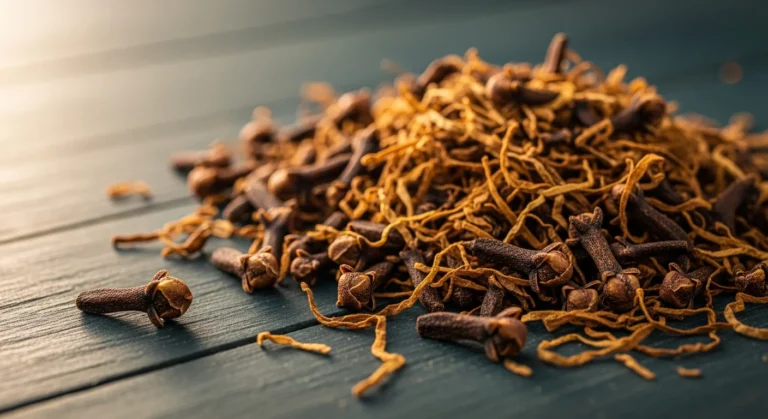
The Sun-Drying Ritual utilizes the natural intensity of the equatorial sun to lock in essential oils.
The Connection to Kretek Excellence
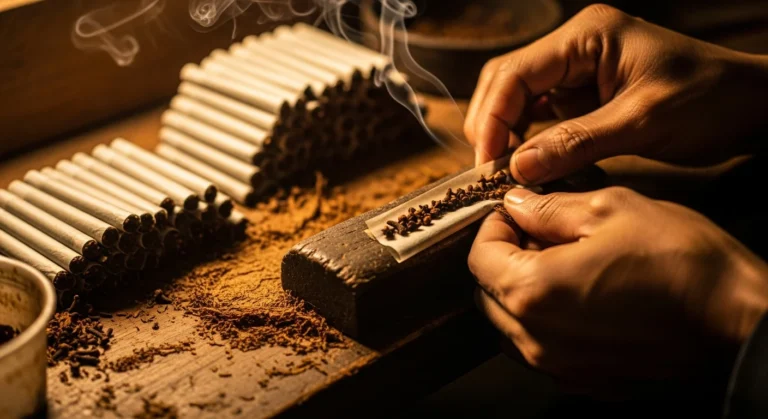
In the world of tobacco, the quality of the clove is just as important as the leaf itself. The Sun-Drying Ritual ensures that when the cloves are ground and blended into a kretek, they release a crackling sound and a sweet, spicy plume of smoke that is synonymous with Indonesian culture. If the cloves are poorly dried, they lack the high oil content necessary for that signature ‘kretek’ sound, which is actually the sound of clove oil vaporizing. This is why premium brands are so selective about the source of their spices, often visiting the drying floors themselves to inspect the harvest.
One of the most iconic examples of this dedication to quality can be found in a Dji Sam Soe 234 Super Premium, which utilizes only the finest hand-selected ingredients. The interaction between the slow-cured cloves and the aged tobacco creates a flavor profile that is both earthy and ethereal. Without the patient application of the sun-drying process, the eugenol would not be as concentrated, and the smoke would lose its anesthetic and soothing properties that many enthusiasts crave.
Furthermore, the traditional drying method ensures that the cloves retain a specific moisture content that prevents them from becoming too brittle. Brittle cloves turn into dust, which burns too quickly and harshly. Sun-dried cloves, however, maintain a flexible ‘woody’ integrity that allows for a slow, even burn. This technical requirement is the reason why the traditional ritual remains the gold standard for the industry, transcending mere sentimentality for a proven scientific benefit.
Deep Analysis of Aromatic Maturation
Analyzing the maturation of a clove bud during the drying process reveals a fascinating look at plant physiology. As the water leaves the bud, the essential oils undergo a process of polymerization, where smaller molecules join to form more complex structures. This increases the ‘fixative’ quality of the aroma, meaning it lasts longer and interacts more harmoniously with other scents. This is particularly important for products like Djarum Coklat, which are known for their deep, lingering sweetness. The sun acts as a catalyst for these reactions, providing the exact energy levels required without over-stressing the chemical bonds.
From a technical perspective, the solar drying mat acts as a low-temperature bioreactor. The enzymes within the clove bud remain active for the first few days of drying, continuing to transform precursor chemicals into aromatic eugenol and caryophyllene. If the bud is killed too quickly by high-heat industrial fans, these enzymatic reactions are cut short, leaving the spice with a ‘green’ or ‘raw’ scent that is undesirable. The ritualistic turning of the cloves ensures that oxygen is integrated into the process, which further refines the flavor profile through mild oxidation.
This depth of flavor is what separates a common kitchen spice from a professional-grade aromatic component. The scientific community has begun to recognize that ‘traditional’ methods often mask highly sophisticated chemical management systems developed through trial and error over a thousand years. By respecting the pace of the sun, Indonesian farmers are effectively managing a high-tech chemical process using only bamboo and light. This insight elevates the status of the farmer from a laborer to a master chemist of the natural world.
Modern Relevance of Ancient Heat
Today, the Sun-Drying Ritual matters more than ever as consumers move away from mass-produced, synthetic flavors in favor of authentic, artisanal products. The global ‘slow movement’ has found a natural ally in the clove forests of Indonesia. Even as technology advances, the demand for sun-dried cloves continues to grow, particularly in the luxury fragrance and premium tobacco markets. For those who enjoy a traditional smoke, such as the Gudang Garam Merah, the authenticity of the clove preparation is a key part of the value proposition.
The ritual also serves as a vital link to the Syzygium Aromaticum: The Volcanic Secret of Indonesian Cloves, which explores how the geography of the islands influences the plant’s growth. As the world becomes more digital and automated, the physical, tactile nature of sun-drying provides a grounding connection to the earth and the seasons. It serves as a reminder that some of the best things in life cannot be rushed, and that nature’s own timeline is often the most efficient for creating perfection.
For more information on the history of spice preservation, researchers can consult various academic texts on food drying and preservation techniques. The ongoing relevance of this method is a testament to the fact that the sun remains the ultimate architect of aroma. As long as there is a demand for the true essence of the clove, the mats will continue to be spread across the hills of Indonesia, capturing the light and turning it into the spice that once moved the world’s navies.
The Sun-Drying Ritual is far more than a rustic tradition; it is a sophisticated method of chemical preservation that defines the quality of Indonesian cloves. By rejecting the shortcuts of industrial dehydration, farmers preserve the complex eugenol profiles that make the spice so valuable. This commitment to the slow path ensures that the sensory experience of the clovewhether in a cigarette, a perfume, or a dishremains unparalleled. Ultimately, the ritual teaches us that true quality is a collaboration between human patience and the natural world. As we look to the future, the lessons of the drying mat suggest that the most sustainable and effective technologies may already be shining down on us every day.


The Sun-Drying Ritual seems almost like a lost art in today’s world of mass production. It’s interesting to see how much science and tradition come together in the production of something as common as cloves. I wonder if other spices undergo similar processes?
You’re absolutely right—sun-drying really sits at the crossroads of tradition and applied science. Long before controlled ovens or industrial dehydrators, producers learned how timing, airflow, humidity, and sunlight could preserve aroma while stabilizing essential oils. Thank you for your visit.