
Discovering Tobacco: The Sacred Leaf of the Indonesian Archipelago
How did a plant originally revered as a conduit to the divine become one of the most controversial industrial commodities in human history? Tobacco: The Sacred Leaf. In the Indonesian archipelago, tobacco has long been more than just a crop; it was ‘the sacred leaf,’ a botanical bridge between the physical and spiritual realms used in rituals, medicine, and social bonding. Long before the first European ships appeared on the horizon, indigenous communities held a complex relationship with Nicotiana tabacum, treating it with a reverence that modern commercialism has largely obscured. The tension between its spiritual origins and its current status as a global economic powerhouse creates a fascinating narrative of cultural transformation. This article explores that journey, peeling back the layers of industrialization to reveal the sacred roots of the leaf that shaped a nation.
The Botanical Origins of a Myth
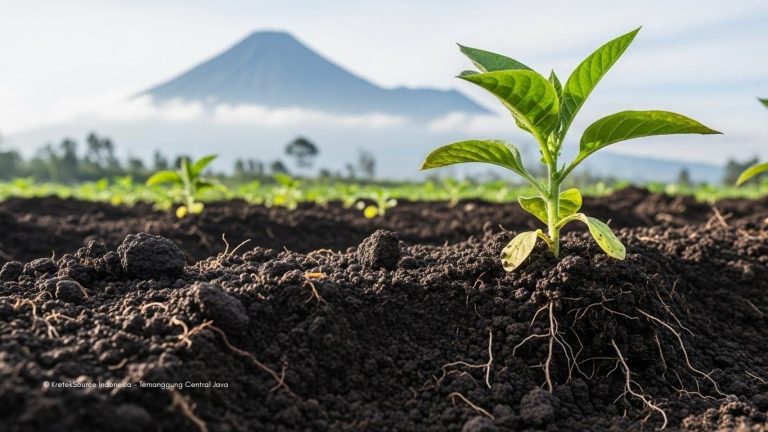
The history of tobacco in Indonesia is often misunderstood as a purely colonial introduction, but the botanical evidence suggests a far more nuanced arrival and integration. While the specific variety of Nicotiana tabacum is often linked to 16th-century explorers, the archipelago already possessed a rich culture of smoking and incense use using indigenous plants. When tobacco finally arrived, it didn’t just replace existing habits; it was assimilated into a pre-existing spiritual framework. The fertile volcanic soil of Java and Sumatra provided an ideal cradle for the plant, allowing it to develop unique chemical profiles that differed significantly from its American ancestors.

In traditional Javanese culture, the cultivation of tobacco was governed by the lunar calendar and specific offerings to the spirits of the land. This wasn’t merely superstition; it was a form of agricultural stewardship that respected the limits of the soil. The leaves were harvested by hand, with the ‘crown leaves’ at the top of the plant being reserved for the most important social and religious ceremonies. This early period of tobacco history was defined by small-scale, high-quality production where the plant’s value was measured in its perceived purity and potency rather than its weight in gold.
As the plant spread across the islands, different regions developed their own specific ‘cults’ of tobacco preparation. In some areas, the leaves were air-dried in the rafters of traditional houses, absorbing the smoke from cooking fires, which added a distinct leathery aroma. In others, the leaves were buried in the earth for a short period to induce a mild fermentation. These diverse practices highlight the fact that before it was an industry, tobacco was a crafta botanical expression of the local environment and the people who lived within it.
Tobacco: The Sacred Leaf vs Industrial Commodity
The transition of Tobacco: The Sacred Leaf from a ritualistic tool to an industrial commodity is a story of economic friction and cultural loss. Under colonial rule, the plant was transformed into a ‘cash crop,’ stripped of its spiritual context to serve the ledger books of the Dutch East India Company. This shift created a profound controversy within Indonesian society: how could a plant so central to local identity be turned into a tool of foreign extraction? The industrialization of tobacco required standardization, which often meant sacrificing the unique, localized curing methods that gave the sacred leaf its original character.
Misconceptions about tobacco often overlook this ‘sacred’ period, viewing the plant only through the lens of modern health debates or corporate profit. However, for many traditional farmers, the plant still carries a weight of responsibility. They view the soil not as a factory floor but as a living entity that must be balanced. The conflict today lies between the large-scale plantations that prioritize nicotine yield and the smallholder farmers who still practice the ‘petani’ traditions of their ancestors. These traditionalists argue that when you remove the ritual from the growth, you lose the true essence of the leaf.
In contemporary evaluations, the ‘sacred’ quality of tobacco is often equated with its organic and artisanal pedigree. Connoisseurs look for leaves that have been treated with the respect of the old ways, seeking out the complex, earthy flavors that only come from traditional curing. This internal struggle between the sacred and the profane continues to shape the Indonesian tobacco landscape, as the nation tries to balance its deep cultural heritage with the realities of a globalized economy.
Tobacco: The Sacred Leaf was historically viewed as a bridge between the spiritual and physical worlds.
The Convergence of Tobacco and Cloves
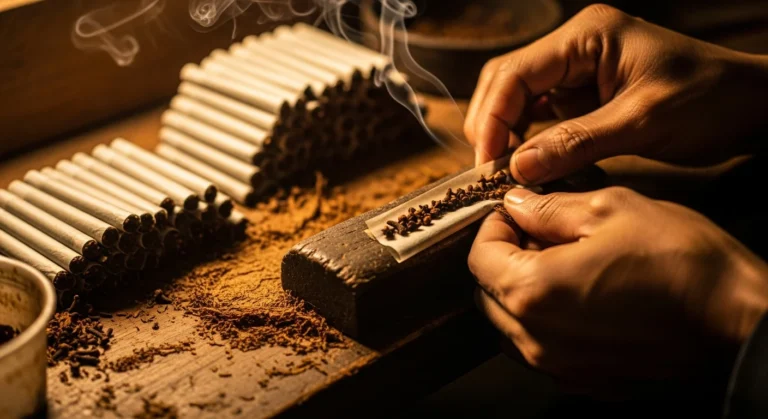
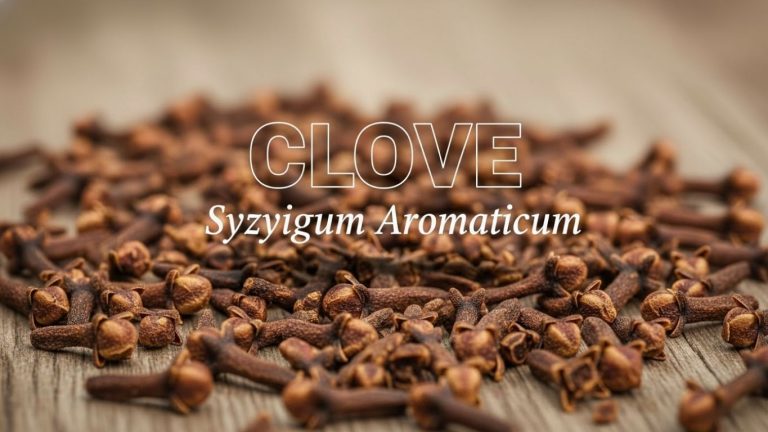
The true genius of Indonesian tobacco culture emerged when the sacred leaf met the aromatic clove. This combination gave birth to the kretek, a uniquely Indonesian invention that unified two powerful botanical traditions. The inclusion of cloves was not just for flavor; it was a continuation of the medicinal use of plants. Early kreteks were marketed as health aids, utilizing the anesthetic properties of clove oil to soothe respiratory issues. This traditional wisdom is still reflected in products like Dji Sam Soe 234, which maintains a classic, unfiltered profile that honors the original spirit of the blend.
The relationship between the tobacco leaf and the clove is symbiotic. The tobacco provides the body and the ‘kick,’ while the clove adds the high-frequency aromatic notes and the signature crackle. For a blend to be successful, the tobacco must be high enough in quality to stand up to the intense spiciness of the clove. This is why the ‘sacred’ origins of the tobacco remain relevant; only a leaf grown in the right soil with the right care can achieve the necessary balance. A modern example of this mastery can be seen in the Djarum 76, a brand that prides itself on its authentic, traditional Indonesian roots.
This convergence also represents a cultural synthesis. The clove, native to the Maluku islands, and the tobacco, which found its home in Java, together created a national icon. When you light a kretek, you are not just consuming a product; you are participating in a historical dialogue between two of the archipelago’s most important plants. The sacredness of the tobacco leaf is thus preserved and amplified by the presence of the clove, creating a sensory experience that is deeply embedded in the Indonesian psyche.
Analysis of the Volcanic Terroir
To truly understand why tobacco became the sacred leaf in Indonesia, one must analyze the role of the volcanic soil. The islands of the archipelago sit on the Ring of Fire, and the regular volcanic activity provides a constant replenishment of essential minerals like potassium, magnesium, and phosphorus. These minerals are crucial for the development of the tobacco plant’s secondary metabolites, including the oils and resins that define its flavor. This unique terroir is what makes Indonesian tobacco impossible to replicate elsewhere, a fact celebrated by brands such as Gudang Garam Patra.
From a chemical perspective, the volcanic soil influences the ‘combustibility’ and ‘ash quality’ of the tobacco. A sacred leaf grown in mineral-rich earth burns more cleanly and produces a whiter, firmer ash, which has long been a mark of quality among traditional smokers. The high altitude of many Javanese tobacco fields also plays a role; the cooler temperatures and intense UV exposure at high elevations cause the leaves to thicken and produce more protective resins. These resins are the source of the tobacco’s deep, sweet aroma, often described as having hints of chocolate or dried fruit.
This technical analysis confirms what the ancient rituals always implied: the quality of the plant is an expression of the health of the land. By treating the leaf as sacred, traditional farmers were effectively practicing a form of soil conservation that preserved the very minerals that made their tobacco world-class. In the modern era, this ‘volcanic secret’ is the primary reason why Indonesian tobacco remains a top-tier ingredient in the global market, proving that the ancient ways have a firm scientific foundation.
The Modern Legacy of the Sacred Leaf
In the 21st century, the legacy of Tobacco: The Sacred Leaf continues to evolve. While the industry has grown into a massive economic engine, the cultural roots of tobacco remain visible in the way it is consumed and celebrated. The modern interest in artisanal and heritage products has led to a revival of interest in traditional tobacco varieties and curing methods. This is explored further in the blog post Volcanic Soil Secret: Why Javas Earth Produces Unrivaled Tobacco, which dives into the geological factors that support this sacred agricultural tradition.
The importance of this history cannot be overstated. It provides a context for the social rituals that still surround smoking in Indonesia, where sharing a kretek is a sign of hospitality and mutual respect. This social ‘glue’ is a direct descendant of the leaf’s original ritualistic use. Even as regulations change and the industry adapts, the fundamental human connection to the plant remains. It is a botanical heritage that belongs to the people of the archipelago, a gift from the volcanic earth that continues to provide for the nation.
For those interested in the broader botanical context, the history of the tobacco plant can be studied through various academic and historical lenses. Understanding the sacred origins of the leaf allows us to appreciate it not just as a commodity, but as a biological masterpiece and a cultural cornerstone. The journey of the sacred leaf is a testament to the enduring power of nature and the deep-seated human desire to find the divine within the natural world.
The story of Tobacco: The Sacred Leaf is a powerful reminder of how human culture and botany are inextricably linked. From its beginnings as a ritualistic tool in the volcanic highlands to its current role as a global industrial giant, the leaf has maintained a unique grip on the Indonesian identity. While the conflict between tradition and modernization continues, the underlying quality of the leafdriven by the mineral-rich soil and ancient curing methodsremains unchanged. By acknowledging the sacred roots of tobacco, we gain a deeper understanding of its complex role in society and ensure that its cultural heritage is not lost to the march of progress. The sacred leaf continues to burn, a small but significant ember of history in the modern world.



The idea that tobacco was once viewed as a sacred conduit to the divine is such a stark contrast to how it’s seen today. I wonder how many other plants have similar stories of transformation from spiritual to commercial use.